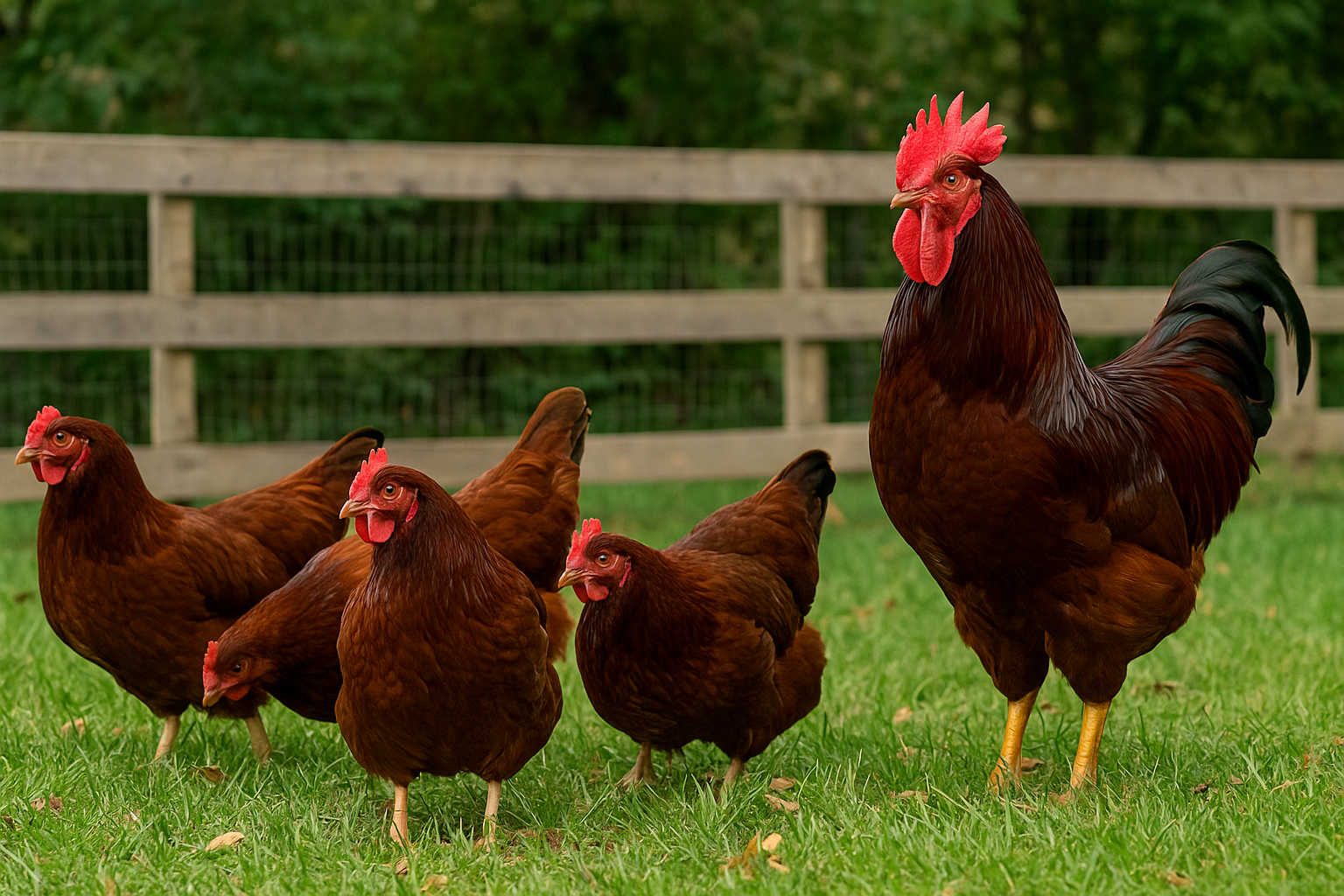
How to raise chickens and create a family chicken coop? Today, more and more people decide to devote part of their free time to keeping a small group of chickens for reasons ranging from self-production of part of their own food to the desire to have an alternative pet next to them. But while once this activity was widespread and the basic knowledge of breeding was known to most, today the constant distancing of many people from the rural world pushes many to look online for the information essential for the correct management of our poultry. In recent years we have published many articles on the management of chickens and their breeding, and in this guide we will try to give you even more the necessary notions to do it successfully.
So let’s see together how to raise chickens and create a family chicken coop.

WHAT DO WE REALLY WANT?
To start raising chickens successfully, you will need to have a very clear idea of what are the reasons that push you to build a chicken coop. Do you wish to have only a few layers to enjoy fresh and genuine eggs or are you looking for alternative pets to keep as pets in the garden? Do you want to devote yourself to the selection of an ornamental breed, or do you have greater needs for egg and meat production like the farmers of the past? Starting with clear ideas will allow you to immediately understand what type of animals to direct your attention to and how many animals you will need; In fact, depending on your choice, the spaces and the basic minimum needs of the group of animals you will have to take care of will vary. Raising chickens and building a chicken coop is not difficult but it certainly requires a minimum of commitment, space and time, and knowing what you want to achieve from the start you will also know how to start on the right foot.
For example, if your need is to have a constant supply of eggs for your family, a small family chicken coop where you can raise a group of 5-6 layers will be for you. If, on the other hand, you want to devote yourself to one of the many ornamental breeds, you will probably need much more space and several boxes in which to keep the various groups of breeders to make a careful selection. In short, for each need there will be different considerations to be made.
WHICH HENS TO GET, AND WHERE?
Depending on your needs, you’ll need to decide which chickens to get and where to buy them.
- If you are only interested in raising laying hens to have eggs for your family, a good choice might be to look for either the White Leghorn utility, the queen of laying hens, or the ISA Warren, another excellent egg-laying hen. You can find them without much difficulty at well-stocked agricultural supply stores. Alternatively, you could decide to look for other laying hen breeds, perhaps choosing from native Italian breeds.
- If, on the other hand, you are looking for ornamental hens to have an alternative pet next to you or to participate in exhibitions, you are spoiled for choice regarding the breed to raise. You could turn to hens that lay colourful eggs, such as the Marans or the Araucana, to purely ornamental breeds such as the Padovana Gran Ciuffo or to the many dwarf breeds of chickens. As a rule, these breeds are difficult to find in markets or agricultural areas (or at least there are hardly any good quality subjects). It is therefore advisable to look for specific breeders of the breed you are interested in, perhaps in the various Facebook groups dedicated to poultry issues or by contacting poultry associations or breed clubs. You will be able to get in touch with other enthusiasts who will help you to form your breeding group and maybe in the future also to exhibit your animals to poultry beauty contests.
To raise chickens and build a chicken coop, is it better to start with eggs (perhaps hatching them in an incubator), chicks or breeders? We have already talked about this topic in other articles, but in general if you breed pure ornamental breeds perhaps it is better to start by buying the reproducers, while if you breed commercial crosses or in any case product animals you can start with chicks.

BUREAUCRATIC ASPECTS
As strange as it may seem, raising chickens and building a chicken coop is not an activity without bureaucratic obligations, although not particularly heavy. The legislation relating to the management of a small poultry farm in our country can vary from region to region, but in general it can be divided into three large groups:
- The regulations at the municipal level, which regulate the possibility or not of keeping animals in certain areas of the municipality, the distances of chicken coops from homes, any building permits in the case of fixed chicken coops and the need to ensure public hygiene and the health of citizens.
- Regulations at national level, aimed at standardizing health monitoring, trade and management of animals bred on the national territory.
- Regional regulations, often temporary, usually aimed at the management of health emergencies such as avian influenza.
The first step to take will therefore be to consult the municipal regulation to verify the possibility of raising farmyard animals (poultry) in the area where you live. There are often important limitations for those who live in urban centers, which depending on the municipality concerned can vary from an absolute ban on breeding to a rather low maximum number of animals that can be bred. There may also be precise indications on the distances to be maintained between chicken coops and homes or minimum distances between animal shelters and boundaries with the neighborhood.
If there is a need to build masonry chicken coops or a concrete base, a building file should be opened.
For many years, one of the most cited reference standards was the Legislative Decree 16 March 2006, no. 158 which effectively established the obligation for anyone who raised even just one hen to have a stable code. To do so, simply request the appropriate form “Request for registration for breeding farms with the veterinary services of the local health authorities” at the offices of the veterinary service of the competent ASL.
A few years ago, however, the Legislative Decree 2 February 2021, no. 27 which in fact, by changing some definitions (and in particular that of company) opens up the possibility of not registering one’s chicken coop with the competent ASL, at least for small family chicken coops and until no more than 50 animals in total are raised. However, given that the operation is in fact extremely simple, absolutely not expensive and that without the barn code it is in fact impossible to obtain prescriptions for most drugs or vaccines (even the mandatory ones) we still recommend that you request them anyway, for greater safety for you and your animals.
We remind you that up to 250 heads, the farm falls among those for self-consumption, and that up to 50 heads it is not necessary to register the farm in the National Database, which is essential if you breed between 50 and 250 heads.
In recent years, the succession of several cases of avian influenza has meant that various regions have issued specific regulations that limit access to pasture or that dictate particular indications in the characteristics that chicken coops and fences must have. Always contact the veterinary office of the competent ASL for updated information on the matter.
Once you have verified the possibility of raising chickens and making a chicken coop, you should proceed to figure out what type of chicken coop to make.
THE CHICKEN COOP
There can be many types of chicken coops to be made, but in general different considerations can be made based on the construction material.
- Masonry chicken coops are obviously robust and durable, and are able to guarantee animals cooler spaces in summer and sheltered in winter. They have the disadvantage of requiring permits for their construction and of being obviously expensive.
- Wooden chicken coops are quite resistant and, if planks of a certain thickness are chosen for the walls, they can offer a fair amount of insulation. Over time, however, they can give shelter to many parasites and in general must be protected from atmospheric agents.
- Metal chicken coops can be hygienic and easy to assemble; they are often also found very small, suitable for those who have to raise a few animals. Unfortunately, they tend to overheat in summer and cool down a lot in winter. However, today there are also metal chicken coops with partially insulated walls.
- Plastic chicken coops are relatively recent and often combine excellent design with great ease of cleaning; these also tend to be strongly influenced by outside temperatures and have the limitation of being usually limited in size.
To raise healthy hens, the chicken coop should generally be a good defense against prevailing winds, with the main opening facing south-southeast. Let’s remember that especially in winter chickens fear winds and drafts more than cold. In summer, it would be important for the chicken coop to have some opening openings in the upper area to create a correct exchange of air.
A separate category of chicken coops are the movable arks. This type of chicken coops, which allow them to be moved from one part of the pasture to another with ease, are particularly suitable for those who raise small groups of animals.
If we opt for plastic or metal chicken coops, we can think of placing trees or deciduous plants to protect them, which will protect them from direct sun in summer and which, losing their foliage, will allow heat and light to pass through in winter.

THE SPACES OF THE CHICKEN COOP
In general, we can say that the chickens you are going to raise will need precise spaces to be able to live with dignity, health and with the possibility of expressing all the complex behaviors that distinguish them. So let’s see the different sizes that the various parts of the chicken coop should have. We therefore distinguish between real night shelter and adjoining enclosure.
We calculate a density of 3-4 chickens per square meter of overnight shelter. This density will allow the taste of the litter to maintain the moisture content and ensure that an excess of harmful ammonia fumes due to the faeces does not accumulate. About a third of the surface of the night shelter should be occupied by night perches. The bottom of the chicken coop can be covered with a layer of litter of a few cm, made of absorbent material such as dedusted wood chips, hay, or straw.
Chickens should be given the opportunity to enter and exit the night shelter at will, but this should be able to be closed in case of need (e.g. predator raids).
The night shelter should always be associated with a fence that allows the animals to scratch safely. We can calculate an outdoor space of at least 2 square meters for each chicken.
The chicken coop enclosure or any grazing area should be predator-proof. If foxes or stray dogs live in the area, the fencing should be two meters high, buried for about 50 cm, and protruding outwards at the top for another 50 cm. In the presence of birds of prey or corvids, it may be useful to cover the enclosure where the animals roam with bird netting. Beware of rats, which can prove particularly insidious, especially with chicks. To limit their presence, you must maintain maximum hygiene and minimize food waste.

BASIC EQUIPMENT
The chicken coop will have to be adequately equipped according to the number of animals we are going to raise. In each chicken coop there must be specific fundamental equipment: drinkers, feeders, perches, nests.
Water must always be present and kept as clean as possible. Drinkers can be of various types: if you raise many animals or if you have to be away for a long time, they can be convenient drinking troughs connected to the water network that allow a constant supply, through special drinking bottles, of water to the chickens. To raise laying hens in small quantities, tank or siphon drinkers are also practical, to be kept always with the horizontal drinking plate. If there is litter in the coop, it can be placed raised on a rigid grid to avoid wetting the bottom material and prevent shavings or other debris from clogging the drinkers.
When raising chickens, you must take into account that the feeders should also be designed according to the number of animals you are going to raise. The most common types of feeders are hopper or linear bar feeders. In both cases, calculate 10 cm of access to the feeder for each chicken. To give a practical example, a bar feeder, accessible from both sides, 50 cm long, will be able to feed 10 hens (5 on one side, 5 on the other). A hopper feeder with a diameter of about 50 cm will be suitable for about fifteen animals. Don’t forget to hang the feeders on the hopper if possible so that the plate is level with the chickens’ neck or head: in this way you will greatly reduce food waste due to food spilling on the ground.
We have already told you that perches should occupy about a third of the surface area of the overnight shelter. They should be positioned about 50-100 cm from the floor of the shelter, depending on the size and age of the animals. Remember that chickens are birds and that they like to sleep as high as possible when they get the chance. Also, since chickens excrete about 30% of their feces at night, it may be a good idea to think about placing a fecal collection box under the perches, in order to facilitate the cleaning of the chicken coop. The latter will be done regularly in order to prevent too much droppings from accumulating in the night shelter. The perches must be placed horizontally, all on the same plane, 20 cm apart from each other. Calculate that each chicken will need 20-25 cm of perch to sleep.
Nests are also very important accessories if you decide to raise laying hens. A nest of about 25 x 30 cm of base should be calculated for every 3-4 hens. If you use a classic box, the bottom of the nest should be covered with soft material, such as straw or hay, to prevent the eggs from breaking as much as possible. It can be useful to immediately use nests with an egg drawer, whose sloping bottom allows you to accumulate all the eggs produced in a special drawer from which you can collect them without problems and without fear that the hens may eat them.

CHICKEN CARE
Chickens are polygamous animals with a strong hierarchical social structure. If you decide to raise chickens and build a coop, you must take these aspects into account. In particular, if you decide to also keep a rooster, remember to form harems with the correct number of females: generally 1 rooster for every 8 hens, but this ratio may change depending on the breed raised. Regarding hierarchy, even a group of only females will develop a strong hierarchical scale, and you must take this into account both when feeding (the famous pecking order) and when introducing new animals into the coop.
Your chickens will obviously appreciate the chance to have access to pasture. Grazing will help keep your animals healthy, and give them extra food in the form of herbs, seeds, and insects, which will improve the quality of the eggs produced, lower stress levels, and keep your animals healthy for longer. As for the spaces, however, calculate about 10 square meters of pasture upwards for each animal. Below this range, chickens will probably end up scratching around and ruining the grass.
You can enrich the pasture with essences that are pleasing to chickens such as dandelion, clover and chicory, but it is important that trees and shrubs are also present to provide shade. Any plant that is non-toxic or loses too much resin will do. Excellent fruit trees that do not require special treatments, such as kiwi, persimmon and mulberry.
Raising chickens obviously takes time: if your chicken coop is small you will need a few tens of minutes a day to make sure that food and water are available and that the animals are well, and a few hours for a deep cleaning every 7-15 days.
FEEDING
It is very important to feed our animals in the best possible way. Chickens and poultry in general have very specific dietary needs, but there are often various myths about their diet that should be debunked. For example, we cannot feed them only with bread and kitchen scraps, but we need to choose a balanced diet based on the time of the animals’ life. For example, chicks need foods with a higher percentage of protein, which decreases with age. Laying hens also require a very specific protein component. In this sense, it can be useful, especially if you are new to raising chickens and building a chicken coop, to use ready-made feed rather than a mix of grains. Grain mixes often have too low a protein content and should therefore be added with an adequate amount of soy or pea protein meal to be valid. The feed has the advantage of being ready to use, well balanced from a nutritional point of view and visually homogeneous: this may seem superfluous but it is very important because hens see very well and have very specific tastes. If you offer a mix of grains, for example, chickens may discard all the ones they don’t like (or aren’t used to) and eat only the ones they like best. In this way, their diet will be unbalanced and food waste will increase. The homogeneity of the feed helps a lot to decrease the ability of hens to spoil food.
REPRODUCTION
Giving birth to their own chicks is the dream of many breeders. We have already dealt with this topic several times, so we leave you a video regarding the management of the hen and natural brooding in chickens:
Above all, however, here you can download our guide to artificial incubation, which will allow you to obtain excellent results and hatch many chicks using the incubator:
Conclusion
Raising chickens and building a chicken coop can be a really rewarding activity, which will allow you on the one hand to come into contact with extremely nice and fun animals, and on the other hand to collect excellent eggs for the kitchen. There are many other aspects that we have already talked about in our blog, from the moulting of the hens to the management of the chicken coop in summer or in the cold winter months, so we also refer you to the reading of our previous articles. Do not forget that Novital is by your side every day in raising chickens and creating a successful coop, offering you reliable products, technical assistance, and expertise. Visit our e-store to discover our products. Happy breeding and see you soon!