The age of breeding stock is an extremely important factor in managing a poultry farm. Choosing hens and roosters of the right age allows you to obtain good production of fertile eggs and, above all, to select birds capable of passing on positive characteristics of health, structure, and conformation to their offspring.
We have seen together how long a hen lives; today we will look at how age can affect an animal’s ability to be a good breeder.
We have seen together how long a hen lives; today we will look at how age can affect an animal’s ability to be a good breeder.
What is the best age for breeding hens?
This does not mean, however, that an older hen is necessarily a worse breeder.
As the years pass, in fact, eggs can become larger. For a breeder interested in reproduction, this can represent an interesting element: from larger eggs, bigger and more robust chicks can hatch, better able to face the first weeks of life.
The age of the hen can therefore affect not only the quantity of eggs produced, but also the characteristics of the new generation.
For roosters the discussion is slightly different.
What is the best age for a breeding rooster?
A rooster generally reaches peak fertility in the first two years of life. Subsequently, fertility tends to decrease, although it remains at sufficiently high levels, especially in light breeds.
In heavy breeds, however, the decline in fertility can become more evident after three or four years of life.
For this reason, when choosing breeding stock it is important to consider not only age, but also the breed, vitality, and individual characteristics of the bird.
What is the ideal age for choosing breeding stock?
As a general guideline, for a farm focused on selection we can consider:
- breeding hens: from 2 to 4 years of age;
- breeding roosters: 2-3 years of age.
Naturally, these are general indications. The final choice should also take into account health, conformation, fertility, productivity, and typical breed characteristics.
Why use 2-4 year old breeding stock?
Using adult subjects in breeding can offer several advantages.
1. Eggs still numerous and larger in size
Even if production tends to decrease compared to the first year of laying, adult hens can still produce a significant number of eggs, often larger than those laid during the first production phase.
2. Vital and still fertile roosters
At 2-3 years old, roosters are generally still vital, active, and fertile. Choosing adult and healthy subjects can help maintain a high percentage of fertile eggs.
3. Larger and more robust chicks
Egg characteristics can influence the initial condition of the chick. Larger eggs can give rise to larger chicks, which can better face the first and most delicate weeks of life.
4. It is easier to evaluate the animal’s conformation
At two years of age, the subject’s plumage is now completely developed. This makes it easier to identify any coloring defects that might not be evident in young subjects.
For a breeder practicing selection, this is an important element.
5. It is possible to better evaluate health and resistance
After a few years of life, an animal has already demonstrated its ability to adapt to the climate and the conditions of the farm.
By choosing subjects for breeding that have demonstrated good health and resistance, the breeder can make a more informed selection.
6. In large breeds, it is possible to evaluate complete development
In large poultry breeds, at two years old, subjects have generally completed their body development.
At this point, any structural merits or defects that might not yet be easily recognizable at the beginning of the breeding career become much more evident.
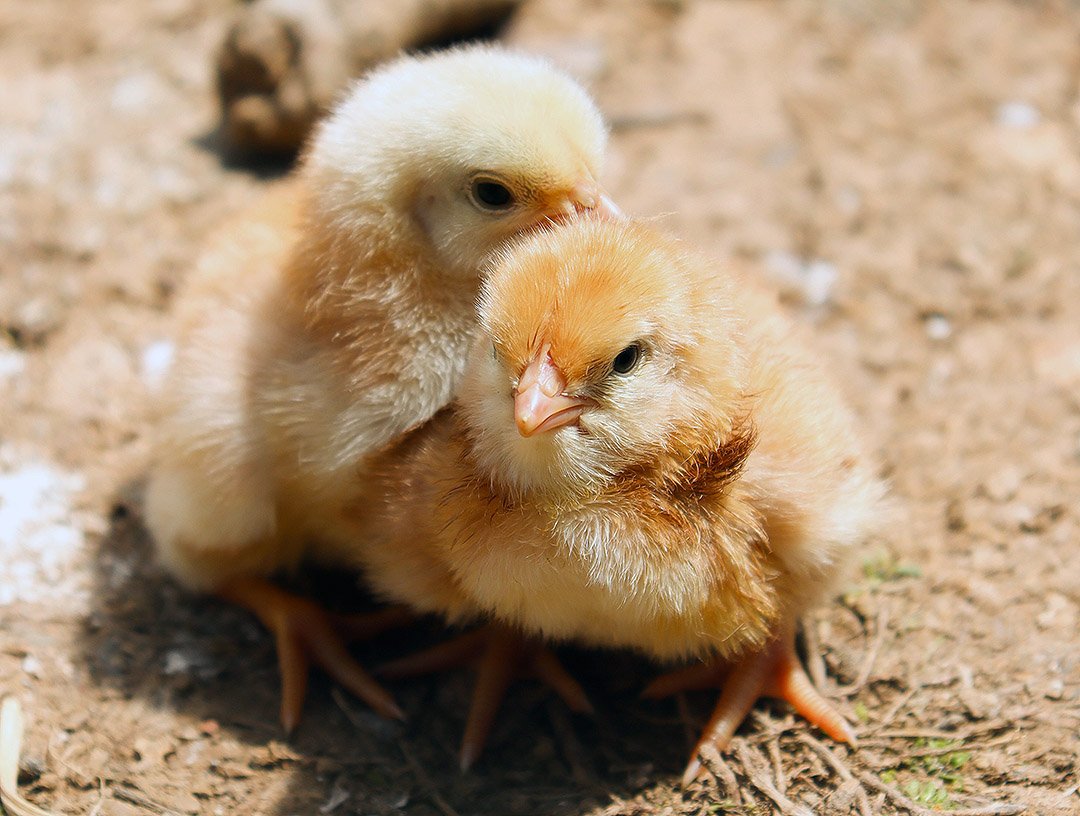
Is it worth using young roosters and hens as well?
The answer is yes.
Even if it can be advantageous to use adult subjects for the selection of breeding stock, it does not mean that young ones should be excluded from breeding.
Mating the most promising subjects already in their first year allows for the observation of their offspring and a better understanding of their ability to transmit the main breed characteristics.
The reproduction of young subjects can also help highlight any genetic defects or latent undesirable characteristics in the parents, which might not be immediately recognizable by observing only the adult subject.
For this reason, in some inbreeding management systems, such as Rolling Mating and Spiral Mating, both young and older birds are added to the breeding stock group each year.
Why use breeding stock of different ages?
A breeding stock group composed of animals of different ages allows you to combine some of the advantages of both categories.
Young birds allow you to:
- evaluate their reproductive capacity early;
- observe the quality of the offspring;
- identify any hereditary defects;
- maintain the replacement of the breeding line.
Adult subjects, on the other hand, allow you to:
- evaluate conformation more accurately;
- better understand the health and resistance of the animal;
- select subjects that have already demonstrated their qualities;
- maintain animals with consolidated characteristics in breeding.
It is therefore possible to build a more balanced selection program by alternating young subjects and adult breeding stock.
Slower selection can yield better results
Carefully considering the age of the breeding stock may seem, at least initially, a slower and less remunerative system from a numerical point of view.
However, more careful selection can lead to better results in the long run.
Choosing healthy, well-conformed breeding stock that has already been evaluated over the years can help reduce the presence of subjects with evident defects and, according to the breeder’s experience, obtain more uniform offspring suited to the farm’s objectives.
For this reason, it is not always convenient to remove roosters and hens from the breeding group too early.
An animal of two or three years should not necessarily be considered an “old-timer”: for a breeder aiming for quality and selection, it can instead represent a precious breeder.
In summary: what is the ideal age for breeding stock?
There is no perfect age valid for every breed and every farm, but we can summarize the main indications:
| Subject | Approximate age | Why |
|---|---|---|
| Young hen | 1 year | High egg production and the possibility of early offspring evaluation |
| Adult hen | 2-4 years | Good compromise between production, egg size, and bird evaluation |
| Young rooster | 1 year | Useful for early testing of reproductive capacity |
| Adult rooster | 2-3 years | Good vitality and fertility, with now consolidated characteristics |
| Old rooster | over 3-4 years | Fertility to be carefully evaluated, especially in heavy breeds |
The choice of breeding stock should therefore be based on age, but also on health, fertility, conformation, breed characteristics, and offspring quality.
In any case, do not forget that Novital will accompany you in every phase of the rearing and breeding of your poultry, with its series of incubators and poultry products. Happy breeding!