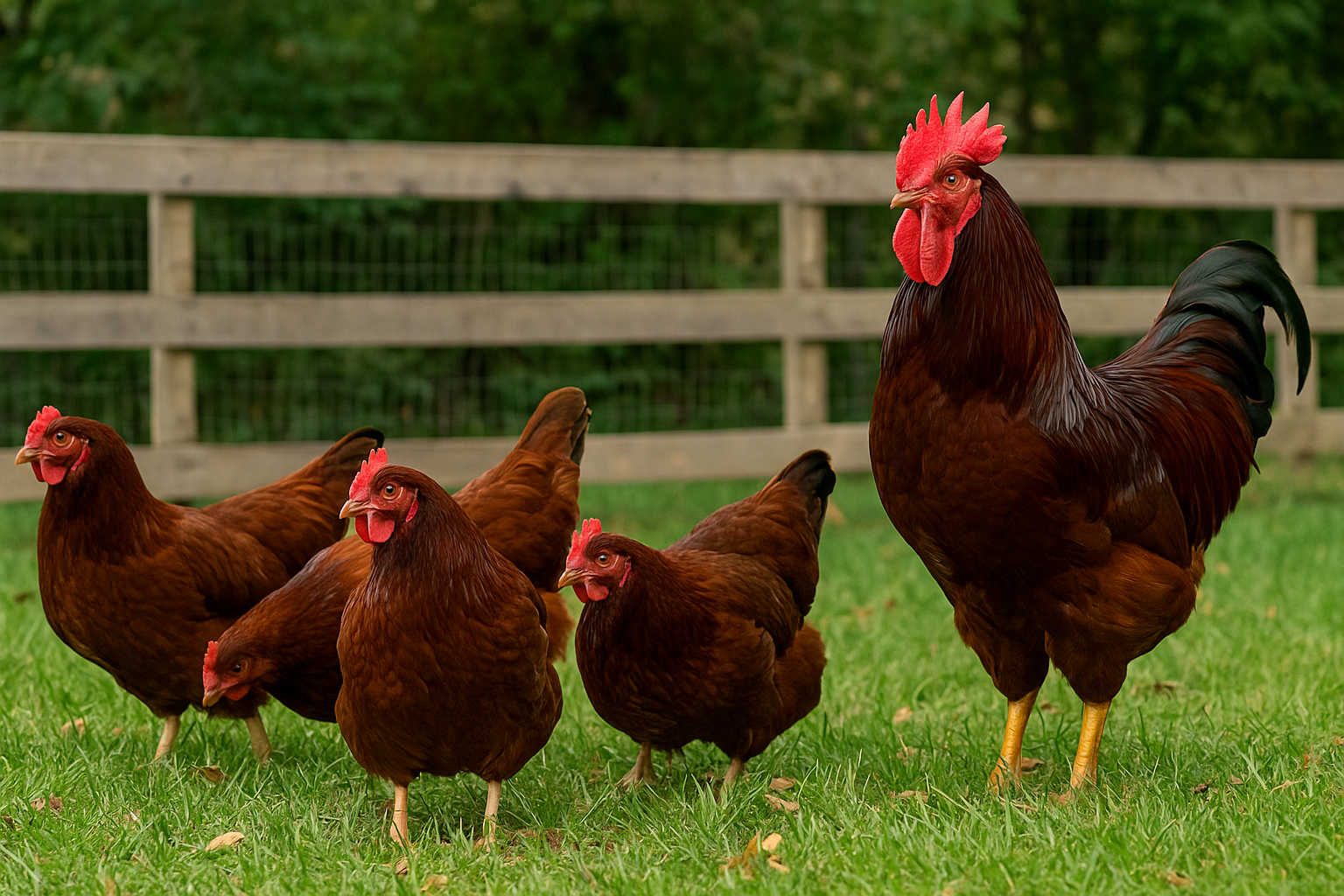
If you have been raising chickens for some time, you have certainly had to introduce new hens to an established coop, and you will have noticed that this operation always causes fights and conflicts among the birds: the chickens already present, in fact, aggressively assert their dominance over the shelter and enclosure, and may attack and injure (sometimes even kill) the newcomers.
Why does this happen? Because chickens are territorial animals with a strong group hierarchy, able to communicate with their own species through distinct vocalizations and capable of recognizing (and relating differently to) up to 130 individuals of their own species. The hierarchy regulates the order of entry and exit from the coop, access to food and water, and even position on the roosts. It therefore becomes natural for fights to occur when new birds are introduced to a coop, disrupting the existing hierarchies.

Add new roosts inside and outside the night shelter to provide refuge for the new birds introduced to the coop
How can you minimize this problem? Here are our tips on how to introduce new hens to a coop while avoiding “bloodshed”:
- Start with quarantine. New birds should always be quarantined to avoid introducing diseases and parasites to the coop. Quarantine can become an opportunity to bring together new chickens from various farms and (by quarantining them together) allow them to form a small social group, so that integration into the main group is less traumatic (see point 2).
- Never just one. If you are about to introduce new birds to the coop, NEVER introduce just one new bird to well-established groups. It will hardly be able to cope with the aggression of all the existing birds. Always introduce a number of chickens equal to at least about one-third or one-quarter of the birds already present.
- Put a net in the coop. When you need to introduce new hens to a coop, divide it in two for some time with a net. Leave the existing birds in the part with the night shelter and put the new hens in the other. After a few weeks, new and old chickens will have slowly become accustomed to each other’s presence and will have started to interact, so when you remove the net they should show less brutal aggression.
- Provide escape routes. Fights—accept it!—will happen anyway. To prevent the new hens from getting the worst of it when introducing them to a coop, provide them with escape routes. The most effective are two: visual barriers and roosts. Install trestles to support new roosts, both in the night shelter and in the outdoor enclosure. The newcomers will be able to escape by perching on the roosts, and the old masters of the coop will not bother them much once they have climbed onto these structures. You can also install visual barriers, consisting of L-shaped dividing panels, which can be made very simply with garden reed fencing attached to a frame. Fleeing chickens will be able to slip behind them, breaking the line of sight of their aggressors and gaining precious moments of calm.
- Double the feeders. When you introduce new chickens, it is best to plan to double the number of feeders and waterers. Many of the aggression crises related to hierarchy inevitably form at feeding time, so you can reduce stress and tension in your coop by providing the newcomers with food and water away from the feeders and waterers that your existing birds habitually use.
- Put your chickens in a cage. If you do not have many birds, move your existing birds to a large cage for a few days, and let the newcomers take possession of the coop for 24 hours. Then reintroduce your old chickens. The aggression of the latter will be dampened, and the new birds in turn will not yet have taken sufficient control of the territory to voluntarily engage in major fights. The establishment of a new social hierarchy will be faster.
- Watch out for roosters. If you already have one or more roosters in the coop, remember that new birds will not be easily tolerated. Remember that chickens are polygamous animals and each male forms a harem with 6-12 females. If you really must introduce new roosters, introduce only very young birds, perhaps more than one, that are not yet sexually mature. Growing up in the coop alongside the old dominant male, if they have an adequate number of hens available, you will see that they will fight much less and a glimmer of (almost) peaceful coexistence will even be achievable.

Two roosters fighting. If you introduce new adult roosters, they will fight fiercely with those already present. It is better to introduce only immature males.
These are our practical suggestions. Two other pieces of advice are often given on how to introduce new hens to a coop, but they do not always provide the expected benefits. Let’s see what they are.
- Spray the new chickens and the old ones with vinegar. By spraying all the birds with vinegar, they should, once put together, remain confused due to the uniform smell and be able to integrate the new birds more easily. But the hierarchy of chickens is based on the recognition of individual birds, and vinegar is unlikely to produce good results in this case. It can, however, be used with some success if you need to add new chicks to those already being raised by a broody hen: by spraying both the old and new chicks with vinegar and introducing them at night under the hen, the latter should more easily accept the adopted offspring.
- Put the new chickens in at night. According to some, this should mitigate aggression and make the introduction of new birds less painful, but usually what happens is that the next morning when leaving the shelter or at mealtime, aggression crises still occur furiously.

Adding new feeders (such as our Kubic) and waterers to the coop helps reduce hierarchical tensions.
By following our suggestions, you will find that introducing new hens into an established coop will be simpler and less stressful for the animals (and for you!). Remember that Novital is here to help, producing a wide selection of feeders, drinkers, and other equipment for raising your poultry. Happy farming and see you soon.