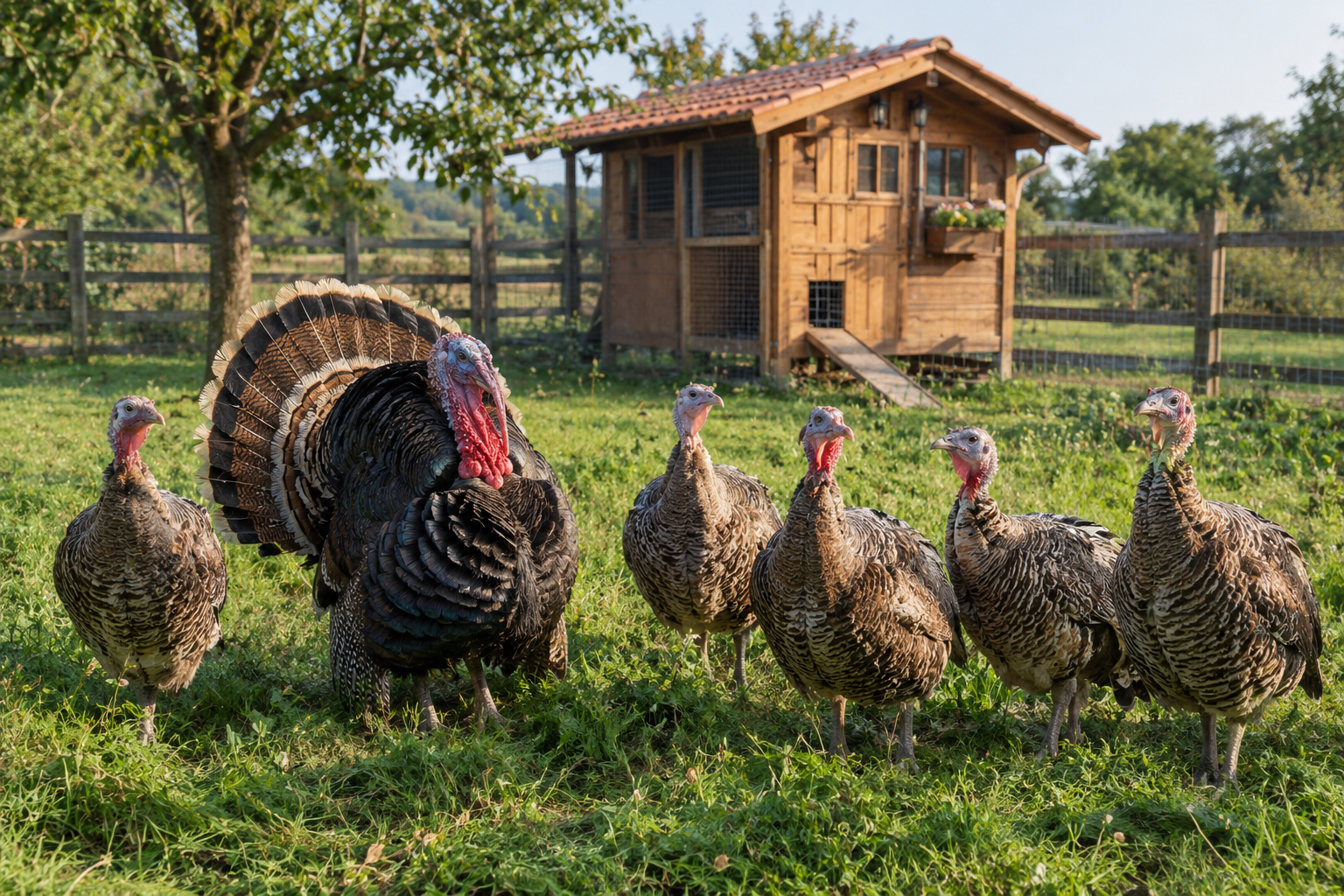
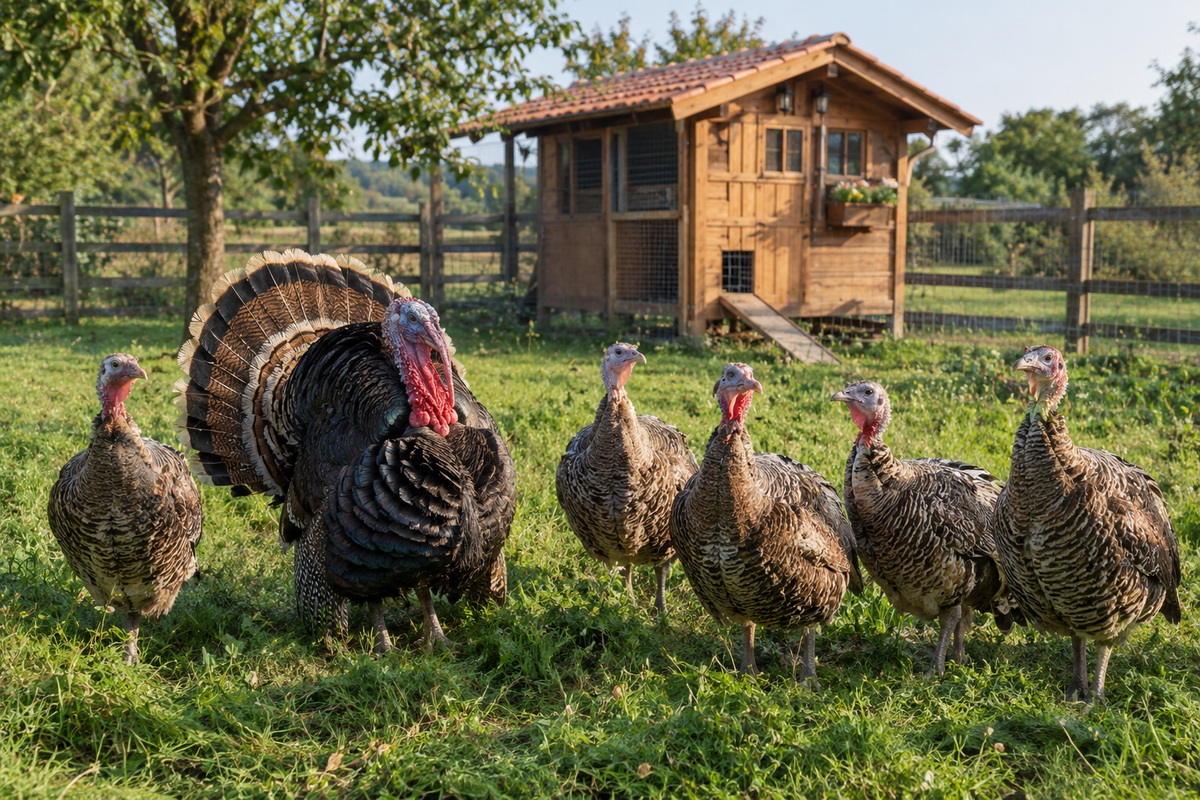
Raising turkeys is a pleasant and exciting activity. They are social, curious animals capable of establishing a positive relationship with their breeder. They are also excellent grazers and can prove to be perfect guests for a rural farm or a small breeding operation.
Be careful, however: turkeys can also be quite delicate animals and require specific care.
So, how do you raise turkeys, and what are the most important things to know before starting? Let’s look at them together.
1. Turkeys: characteristics and history
The domestic turkey (Meleagris gallopavo) is the largest of the living galliforms. In the wild, it is widespread across a very vast area of the American continent, from Mexico to Canada, and is present with several subspecies.
It was likely Mesoamerican populations who first began breeding turkeys. It arrived in Europe with the Spaniards, and by the 16th century, it could already be found on farms in numerous European countries.
In Italy, too, the turkey has an ancient history. The Serenissima Republic of Venice, for example, issued an edict in 1577 encouraging its breeding, even going so far as to prohibit its killing to favor its spread throughout the territory.
The scientific name Meleagris is linked to a curious historical error by the Bolognese naturalist Ulisse Aldrovandi, who believed the turkey could be identified with the meleagrids of Greco-Roman mythology, which were actually guinea fowl.
But let’s leave history behind and come to what most interests those who want to raise turkeys.
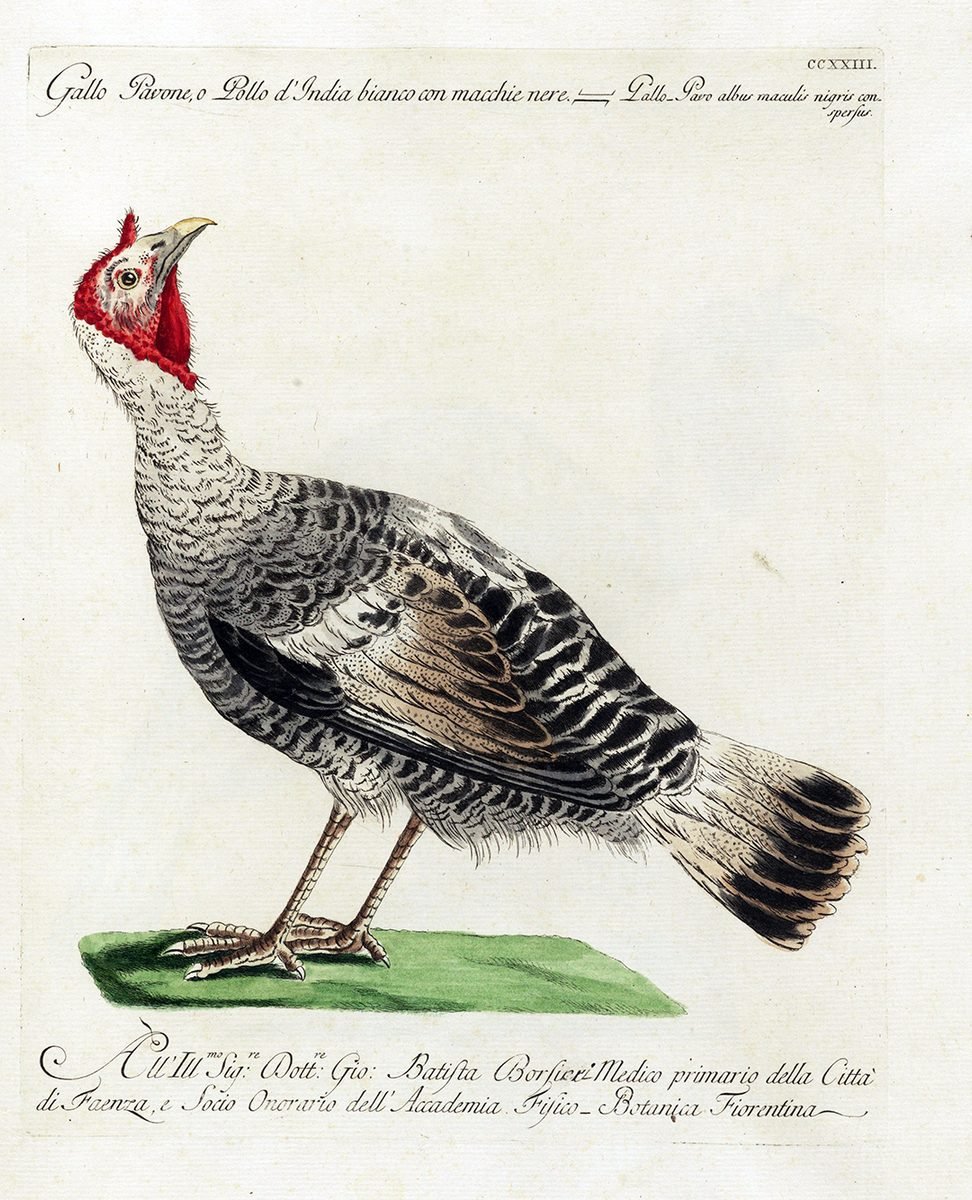
A turkey in an 18th-century illustration
2. How much space is needed to raise turkeys?
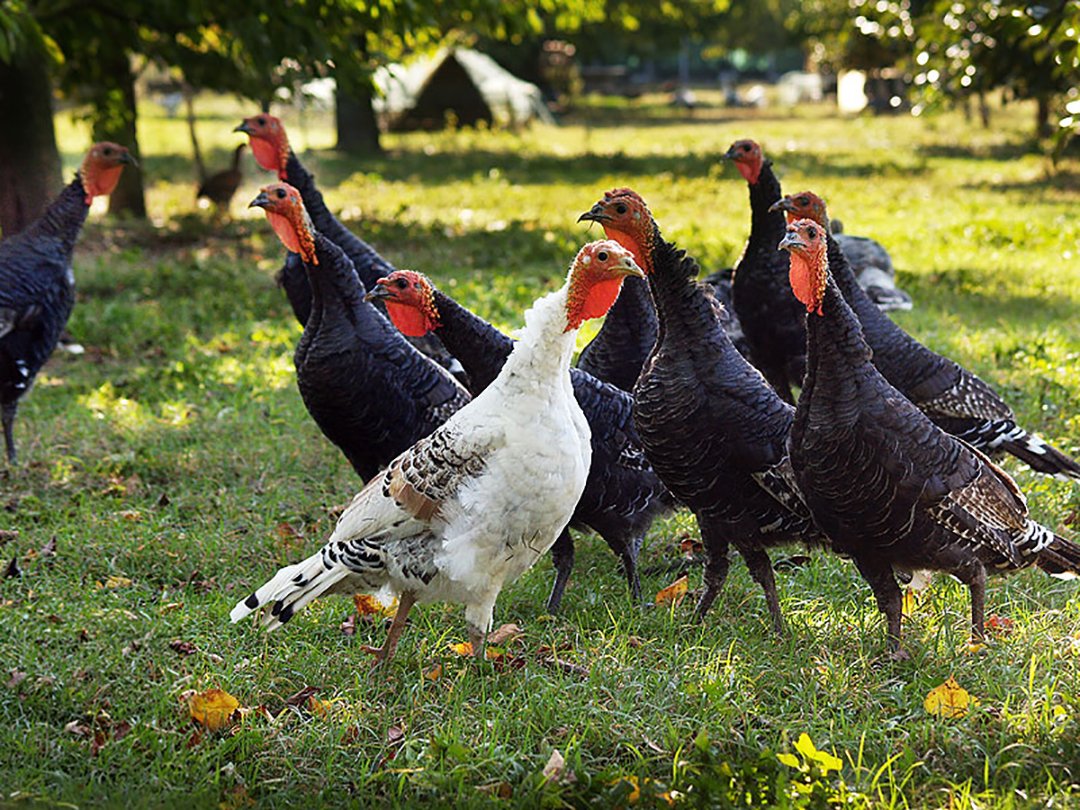
If you are thinking of raising turkeys, take one thing into account from the start: these animals need space.
Calculate at least 25 square meters of pasture for each turkey and about 1 square meter of night shelter for every 2 birds. Thanks to their long legs, turkeys are particularly suited to utilizing meadows and pastures, even steep ones, including those in hills and mountains.
The night shelter must be sufficiently spacious and equipped with perches suitable for the weight of the animals and the size of their feet. Let’s remember that a turkey can weigh more than 10 kg! Heavier meat breeds might not even be able to climb onto the perches.
How many turkeys should be raised together?
The turkey is a social animal and naturally lives in groups. For this reason, it is generally not a good idea to raise only a pair. The minimum reproductive unit can consist of one male and two females, but it is preferable to organize a small harem composed of one male and 5-6 females.
Also, pay attention to fencing: some light breeds are excellent flyers and might surprise you!
3. Turkey behavior
In raising turkeys, you will soon discover that these birds have extremely interesting behaviors.
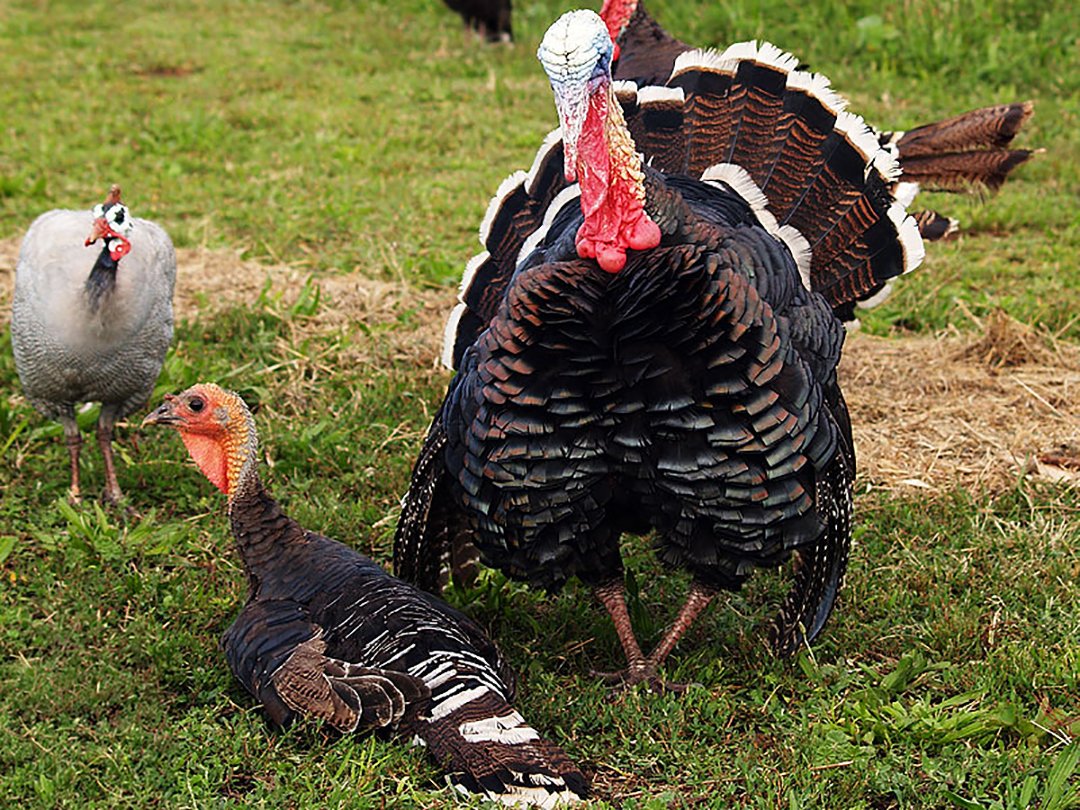
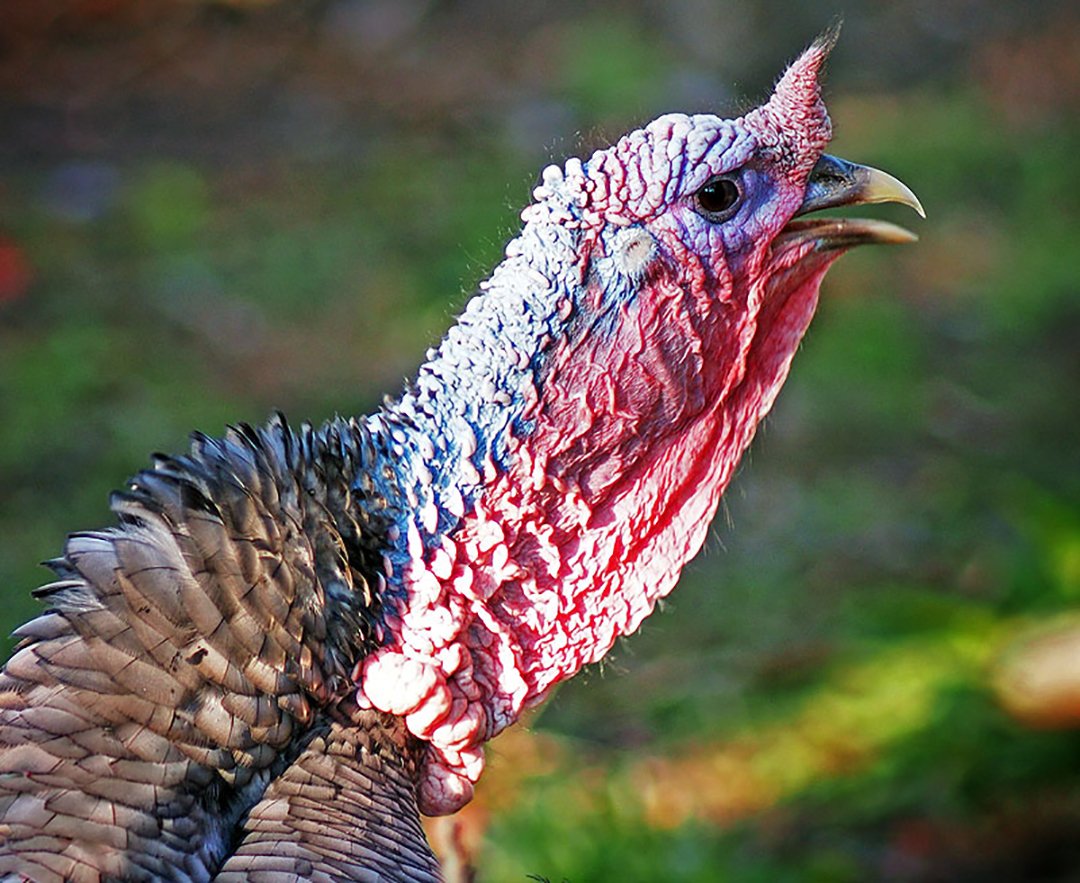
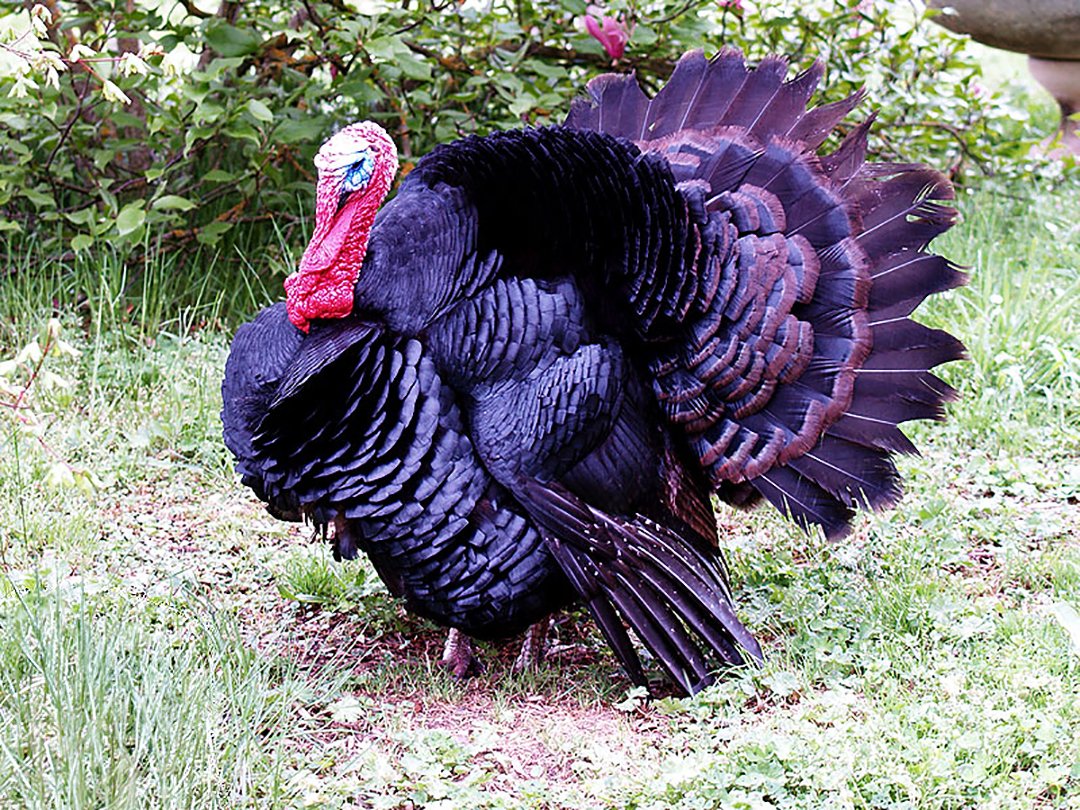
Males, especially during the breeding season, perform spectacular courtship displays: they fan their tails, lower their wings, and puff up the prominent caruncles and wattles on their heads. Then they begin to gobble, more or less softly, while circling the females waiting for a response.
The female ready for mating crouches on the ground in front of the male, who then proceeds to mate.
Watch out for male turkeys
Females are not naturally available for every mating attempt. A particularly insistent male may therefore turn his attention to other poultry as well.
It is for this very reason that the correct ratio between males and females is fundamental in turkey breeding.
An adult male can also be very heavy compared to a hen and can seriously injure her during a mating attempt.
For this reason, it is better to avoid leaving a male turkey alone with hens or other poultry of much smaller size.
Another curiosity: females can also perform behaviors reminiscent of the classic male tail-fanning. In young specimens, this can make sex identification not always immediate.
4. How do turkeys reproduce?
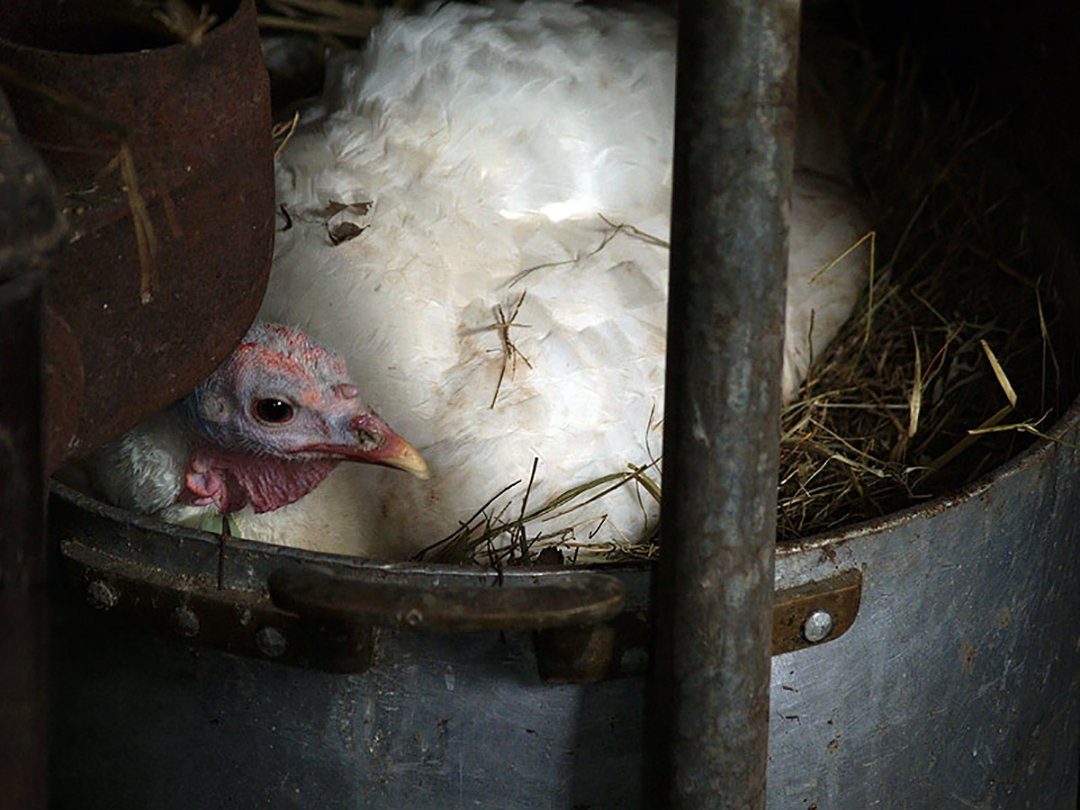
After mating, the turkey hen generally looks for a secluded place to build her nest.
Eggs are laid on average one every two days and are significantly larger than chicken eggs, with a cream-colored shell generally speckled with brick-red.
After laying about a dozen eggs, the female can begin brooding.
If, however, you regularly collect the eggs for the incubator, the hen can continue to lay.
How long does turkey egg incubation last?
Turkey eggs take about 28 days to hatch, both when incubated artificially and when brooded by the hen.
If you leave the female to brood, remember to check that she gets up regularly from the nest to drink, eat, and defecate. Some hens are so diligent in brooding that they completely neglect their own needs. In these cases, they may soil the eggs with feces or stay on the nest too long.
5. How to raise turkey poults
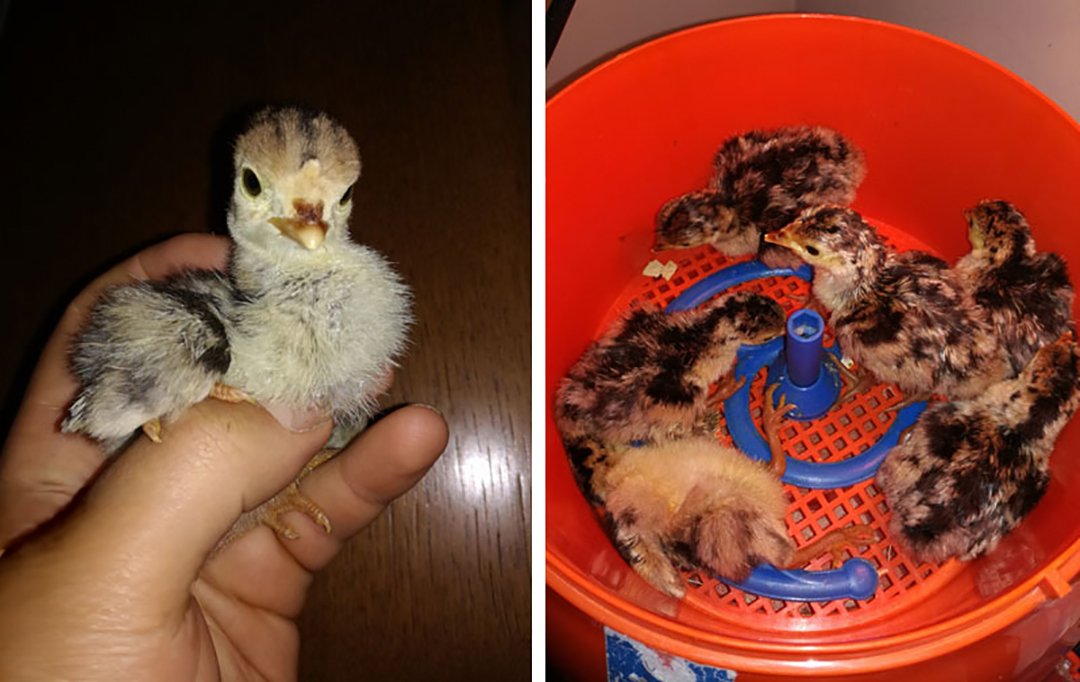
Raising turkeys in the first weeks of life requires a bit more attention.
Turkey poults, let’s face it, don’t exactly shine for their wit and initiative!
When raised with the mother, she normally takes care of teaching them where to find water and food.
If, on the other hand, the poults were hatched in an incubator, it may be necessary to intervene directly. It may be enough to bring the little one close to the waterer and gently dip its beak in the water, or show it where the feed is located. If they do not learn to drink and eat quickly, they can face dehydration and debilitation very rapidly.
How to prepare the brooder for turkey poults
In the first few days, it is preferable to use only a hygienic layer of absorbent paper on the bottom of the brooder, to be replaced frequently.
This reduces the risk of the little ones mistaking the bedding for feed and ingesting it.
The initial temperature of the brooder can be maintained around 37 °C, reducing it progressively until reaching about 20-22 °C around 20 days of age.
If the young are raised with the mother, at least during the first month, it is appropriate to set up a protected environment of about 200 × 100 × 50 cm, placed outside but at least partially protected from the elements.
As they grow, naturally, their space requirements also increase.
6. How to feed turkeys
The feeding of turkeys is one of the most important aspects of breeding.
In nature, these animals are great grazers and feed on insects, small reptiles, grasses, seeds, and fruit.
Their nutritional needs, particularly important during the first weeks of life, must also be taken into account in domestic breeding.
It is primarily the protein component of the diet that deserves attention.
What do turkeys eat in the first few weeks?
For light and medium-heavy breeds, we can roughly follow this scheme:
- from 0 to 2 months: game feed with about 28% protein;
- from 2 to 4 months: 75% feed at 28% protein and 25% grains, starting to offer pasture as well;
- from 4 months onwards: commercial feed with about 18% protein, administered from midday onwards.
This last method allows turkeys the opportunity to spend the morning at pasture, searching for grasses and insects.
Naturally, these indications primarily concern light and medium-heavy breeds and should not be automatically applied to large industrial hybrids, which have different nutritional needs.
7. Which turkey breeds to raise?
Perhaps not everyone knows this, but in our country, numerous Italian turkey breeds have been selected over the centuries.
Light and medium-heavy specimens of local breeds are often particularly interesting for small rural farms and outdoor breeding.
They are generally hardier than heavy industrial hybrids and can adapt well to pasture.
Among the Italian breeds we find:
- Brianzolo Turkey;
- Common Bronzed Turkey;
- Euganean Hills Bronzed Turkey;
- Early Chestnut or Italian Chestnut Turkey;
- Po Valley Ispido Turkey;
- Benevento Turkey;
- Parma and Piacenza Turkey;
- Rovigo Ermellinato Turkey;
- Italian Black Turkey;
- Romagnolo Turkey.
Some of these breeds are very rare today and are raised by enthusiasts who seek to preserve their genetic heritage. And this is precisely one of the most fascinating aspects of turkey breeding: behind a small group of animals, there can be a centuries-old history worth preserving.
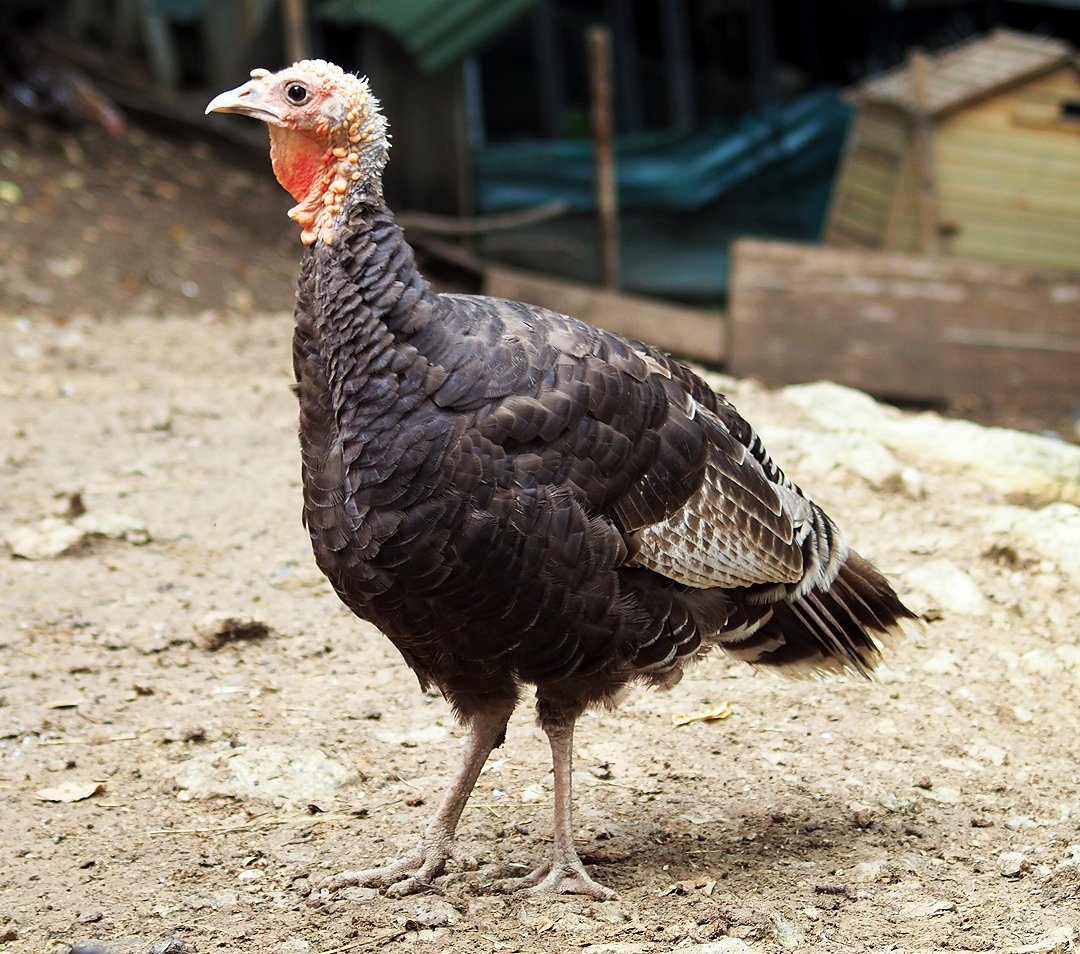
Early Chestnut turkey female
8. Turkey diseases: focus on prevention
Turkeys can be quite delicate animals and are subject to numerous diseases, from fowl pox to mycoplasma infections.
Before starting a breeding operation, it is therefore always advisable to inquire at your local veterinary service about recommended or mandatory vaccinations in your area.
Can turkeys and chickens live together?
This is a question we are frequently asked.
Mixed breeding with chickens and other poultry is often discouraged precisely because some pathologies can have much more serious consequences for turkeys.
Other species can indeed be healthy carriers of certain pathogens or be less sensitive than turkeys.
If you decide to raise multiple species together anyway, it is important to pay particular attention to the origin and hardiness of the animals and maintain high standards of hygiene and management.
9. The relationship between turkeys and humans
Raising turkeys can be very fun also because of the relationship these animals can establish with people.
They are social animals and, if accustomed to the presence of humans from a young age, can become surprisingly trusting.
An imprinted turkey may even come to consider you a possible partner and court you with some insistence.
Be careful, however, with adult males, especially around small children.
A large male can be aggressive, and an attack can have serious consequences.
10. Curiosities about turkeys
And we finally come to the curiosities, because turkeys are animals that seem to have been designed specifically to surprise the breeder.
Can turkeys and chickens crossbreed?
Yes, crosses between turkeys and chickens have been documented, although these are extremely rare events.
The outcomes can be peculiar and depend on the combination of the two species.
Can turkeys hunt snakes?
Yes. Turkeys are excellent predators of small reptiles and snakes and can therefore prove useful in some rural contexts, especially in gardens and hill and mountain pastures.
What is the turkey’s “brush”?
Those strange hard, bristly feathers that grow on the male’s chest are called a bristle beard, or granatello.
Females normally do not have them or develop them in a much less evident way.
Why shouldn’t you pick up a turkey by the tail?
Turkey tail feathers come off very easily if grabbed.
So, if you want to handle a turkey, never pick it up by the tail, unless you want to end up with a handful of fl… pardon, a handful of feathers in your hand!
How many plumages exist in turkeys?
There are many different colorations and plumages, linked to a particularly interesting genetics.
For those passionate about selection, the world of plumage coloration is one to be discovered.
What is the turkey’s call called?
The turkey’s call is called gobbling.
And if you have multiple males together, you already know what to expect: the gobbling of one can trigger the response of dozens of others.
Sometimes it is even enough for the breeder to imitate their call or suddenly speak loudly to trigger a real “verbal brawl” between turkeys—and it is probably one of the funniest things that can happen to you on a farm!
Conclusions
Raising turkeys is not particularly difficult, but it requires a bit more attention than managing common chickens.
Space, pasture, adequate feeding, a correct ratio between males and females, and good health prevention are the fundamental elements for obtaining healthy and robust animals.
If you have a good pasture available and are willing to dedicate a little extra attention to your animals, you will discover that the turkey is an extremely interesting bird.
And, above all, you will hardly be bored.
Because one thing is certain: after raising turkeys, when you hear someone gobbling in the street, you won’t be able to help but respond!
________________________________
You might also be interested in: