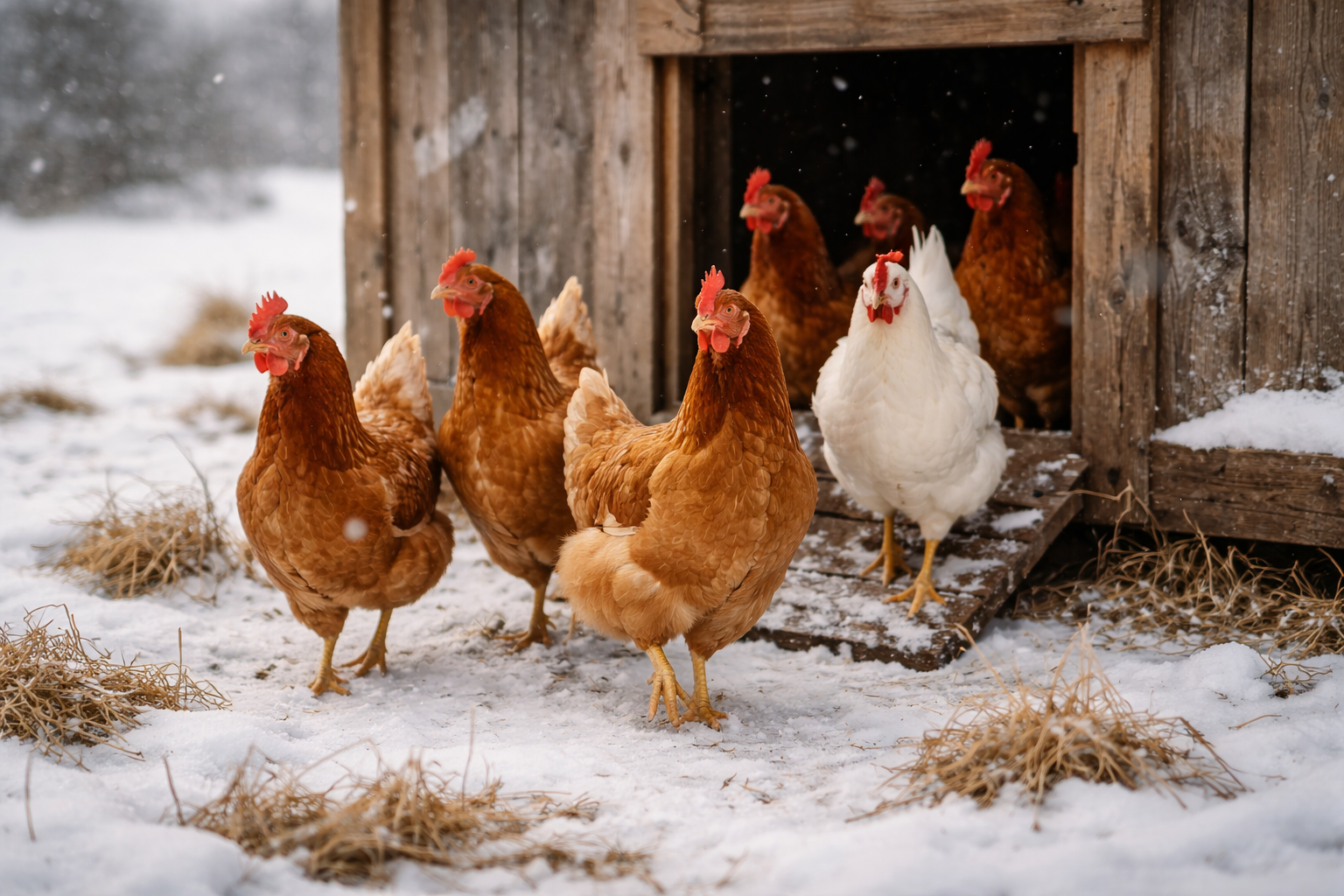

The chicken coop in winter, under the blanket of snow that has just arrived in this remnant of the end of the season… Farmers have to deal with the problems that frost and cold pose to animal management. This task is not much more burdensome than the usual maintenance of your own farm, but it certainly requires some extra attention. So here are 8 tips and tricks to raise your chickens in the best possible way even in the snow
Healthy and robust chickens are not afraid to scratch around even in the snow, but they must still have a dry and well-equipped chicken coop in winter.
- A good draft-free chicken coop works wonders. Chickens are usually not too afraid of the cold, and many hardy breeds are active even in the snow. But all chickens must be able to have a well-equipped, draught-free night shelter if they wish. However, draft-free does not mean without good ventilation: air stagnation must be avoided. Use a good litter made of dusted chips, it will insulate the bottom of the chicken coop and together with the chickens’ feces it will form a litter that will keep the chickens’ feet away from frost.
- Water and food, two priorities. In the management of the chicken coop in winter, water and food are two critical aspects. You can integrate sorghum and oats into the grain mixture, if you don’t already do so. You can also add chopped dried nettles and hemp seeds if necessary. Increase the protein regimen of your chickens’ diet for some time, until the cold gives you some respite. Water is very important: remove the ice from the troughs daily, and if you use open tanks, let an empty plastic ball or bottle float on the surface, they will help break the surface layer of ice. Add one tablespoon of apple cider vinegar for every 10 liters of water.
- Watch out for the little ones. With the same rusticity and physical robustness, small animals, having a body surface area in proportion larger than their size, will tend to disperse heat more quickly. So beware of chicks, chicks and dwarf breeds, which will end up suffering from the cold more than giants such as Jersey Giant and Brahma.
- In the winter coop, increase the number of perches in the fence and pasture. One of the parts of the chicken’s body that are most likely to suffer from the cold are the feet and tarsi. If you offer them many perches, they will be able to perch on them and in that position their feet will remain protected and warmed by the animal’s own body.
- Collect the eggs more often than usual. Eggs also freeze, and if you leave your eggs in the nests in the evening you may find them cracked and frozen, difficult to use for the canteen and absolutely unusable for hatching. Collect the eggs every evening and then also in the middle of the morning, in this way you can limit the damage of the frost.
- Let the chickens decide. Once the chicken coop has been set up in winter well, give the chickens the opportunity to come and go as they please. Many chickens prefer to spend all day outside even in the snow, and for healthy and robust animals there is no danger whatsoever. On the contrary, over time you will end up selecting animals that are increasingly rustic and accustomed to the weather conditions of your region.
- Watch out for combs, wattles and legs. In chickens, these appendages are bare and therefore more likely to suffer frostbite damage. If you have breeds with earlobes, wattles and highly developed combs, to prevent them from freezing and then leaving conspicuous scars on the animal, spread a glycerin-based ointment on the parts of the body at risk. The use of glycerin on the paws will also help fight any cases of mange.
- Watch out for mud. Melting snow and winter rains can turn the chicken coop into a quagmire in winter. Try to avoid it as much as possible, especially in pens, because keeping your feet in the cold mud is a source of suffering for our animals. It is better to have a cover of coarse, non-pointed gravel, or in the case of large puddles a cover with plenty of straw or hay.

Conclusion
Here, these are our basic tips for managing the chicken coop in winter. We are obviously by your side at any time of the year, with our poultry care products and with our incubators to give birth to your chicks even in the bad season! And do you have any other tips or tricks you’d like to share with us? Write them to us and we will integrate them into this article!