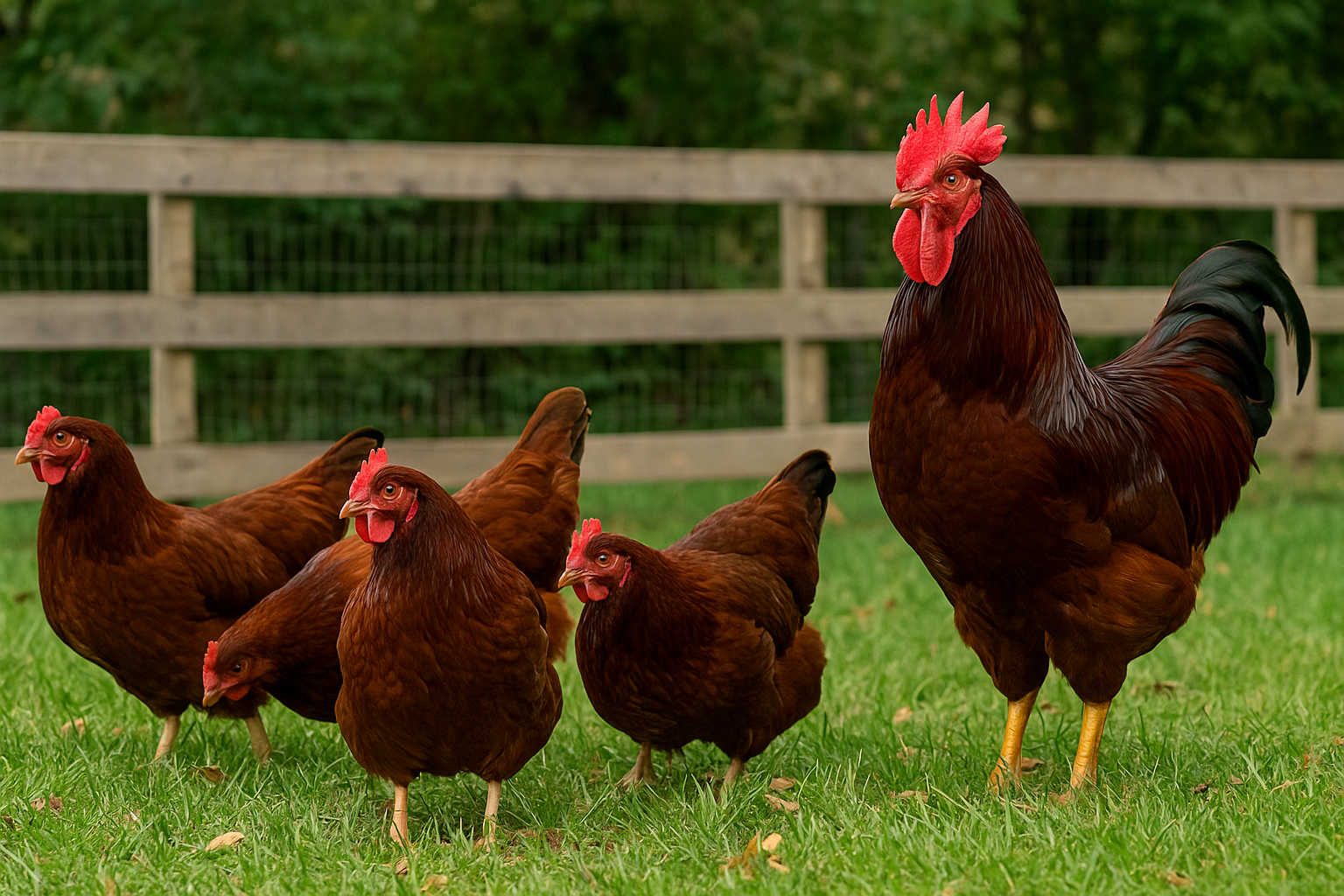
The moulting of hens is a natural phenomenon thanks to which, with monotonous regularity, these birds renew their plumage. Yet it seems able to raise many doubts in less experienced breeders who sometimes look at it with fear if they do not even consider it a symptom of some disease. So let’s try to understand together what chicken moulting is, when it happens and what consequences it has for our animals and their health.
If we observe a rooster or a hen at the beginning of the year, while grazing in a spring meadow, we will be enchanted to observe their beautiful shiny and shiny plumage, which stands out against the green grass; We will be fascinated by the long arched and majestic feathers of the rooster’s tail, the composed fan of that of the hen, the pointed hands of the rump or the almost lion-like mane at the base of the neck of many specimens. But if we go back to observe the same subjects at the end of summer, we will observe missing or broken feathers and opaque and ruined plumage. Atmospheric events, mating, brooding, fights and fights for food and perches, even parasites: all these factors lead the plumage of chickens to be inexorably ruined. But as we know, feathers and feathers represent for birds not only a precious aid for flight but also an effective system for maintaining a constant body temperature in adversity: for this reason, by periodically restoring the plumage, the moulting of hens allows these animals to guarantee an excellent state of health and good protection against cold, heat, parasites and predators.

When does the moulting of chickens take place?
Between the end of summer and autumn, chickens slowly begin to change their plumage. The loss of old feathers is never total and sudden in healthy animals, but is partial and gradual. The moulting of hens begins with the loss of the feathers located behind the head and on the neck; subsequently the back, rump, wings and tail are affected by the phenomenon. During the moulting of the hens you will find feathers scattered throughout the henhouse while the new plumage will appear on the animal’s body in the form of spikes that will give life to the new feathers. Generally, the last part of the chicken’s plumage to be completed is the tail.
The shedding of chickens usually begins in September-October and lasts about two months. It can start earlier, at the end of August, and in this case it will last longer, up to three to four months; It can start later, in October-November, and end earlier than expected. During the moulting of the hens, the behavior of the latter changes abruptly: in our friends they stop hatching and laying eggs, while their consorts become more peaceful and stop singing and mating.

Practical consequences of moulting chickens
The duration of the hens’ moult is therefore also of economic importance: the poultry industry has in fact selected subjects in which the moult takes place late and ends quickly, in order to limit the annual period of non-laying as much as possible.
It may be a good idea for the small breeder to breed only females that start moulting as late as possible, so that he can select a small group of efficient layers himself. Even the incubation of the eggs can be carried out according to the molting of the hens: in fact, we know that the pullets that are born in the first months of the year grow more but in September-October they enter molting, after having laid for a maximum of a couple of months. Pullets born late, on the other hand, between April and June, if on the one hand remain smaller in size, on the other hand they begin to lay in the following autumn-winter and thus skip the moult of the first year, remaining productive as layers for many months. The choice of when to give birth to our animals can therefore depend on what we want to achieve (larger animals, which lay larger eggs and moult early or smaller animals but which lay more by moulting later.

Special care during moulting
During the moulting of the hens we will have to take care of the feeding of our darlings as much as possible. In fact, with moulting, each hen can lose more than one and a half ounces of feathers and feathers, or about 150 grams of body protein: we will have to remedy this lack by using a feed with a higher protein regime for our animals. We also provide plenty of clean water, and avoid handling animals unnecessarily so as not to cause them unnecessary stress.
We keep the cleanliness of the enclosure and the overnight shelter at the highest level. Provide your animals with a good green pasture where they can gather insects and other invertebrates. More than ever in this period, watch out for predators: our chickens are in fact in the situation of not being able to fly as nimbly as usual. Throughout the period of the hens’ moulting, never shorten the feathers of their wings: until the plumage is perfectly developed, in fact, cutting the feathers (not yet formed) could lead to bleeding, physical weakening, stress and pain for the animal.

Let’s not get confused!
The loss or lack of plumage does not always occur due to the molting; So let’s see some situations in which the moulting of chickens has nothing to do with the absence of feathers and feathers.
- In chickens of bare-necked breeds: in these animals the neck feathers are missing due to a particular genetic condition that makes the skin of the neck hairless. The wetsuit in this case really has nothing to do with it.
- If you have a rooster and a few chickens, you will notice that the backs of the females will be devoid of feathers. It has nothing to do with the moult in this case but the fact that the male, with repeated mating, ruins the plumage of the females. To avoid this situation you will need to provide each rooster with the right number of females (six to eight for heavy breeds, up to ten to twelve for dwarf or light breeds).
- If you notice missing or broken feathers in spring or summer, check that the chickens do not fight often or that they do not have parasites. Some types of pollen lice terribly ruin the plumage, and the animals should therefore be treated with the appropriate pesticides.
- If outside the moulting period you notice subjects with large patches of bare skin on the neck, head, or back, and if you see that the new feathers are broken or bloody, beware: your chickens may have developed pica, an abnormality in behavior that leads them to eat each other’s feathers to the point of cannibalism. Give them fresh herbs, vegetables, and ample access to pasture.
Conclusion
Do everything you can to ensure that your animals have the best environmental conditions and proper care. And above all, remember that Novital has always been close to you with its range of products suitable for every stage of your poultry farming. Happy breeding!